The Ultimate Guide to Smart Indoor Gardening: Transforming Your Home into a Thriving Ecosystem

Introduction: The Evolution of Indoor Horticulture
Bringing nature indoors is a rewarding experience that transcends simple home decoration. However, for many urban dwellers, the daily demand of keeping a lush indoor jungle alive can quickly turn from a hobby into an overwhelming chore. Traditional watering methods, handed down through generations, are often imprecise. They rely on “finger-dipping” or visual cues that are frequently misleading, leading to the two silent killers of houseplants: parched, brittle roots or suffocated, rotting roots due to chronic overwatering.
At Mozafer, we believe that the future of indoor horticulture lies in the seamless integration of botanical care and smart technology. We are moving away from manual guesswork and toward a new era of precision and sustainability. This guide explores how smart watering systems are not just a luxury, but a necessity for the modern, eco-conscious plant lover.
The Philosophy of Smart Watering: Precision Over Guesswork
The core philosophy of Mozafer is to create sustainable, efficient living environments where efficiency meets beauty. In the past, “smart home” technology was often associated with gadgets for entertainment or security. Today, we are applying those same principles to the natural world inside our homes.
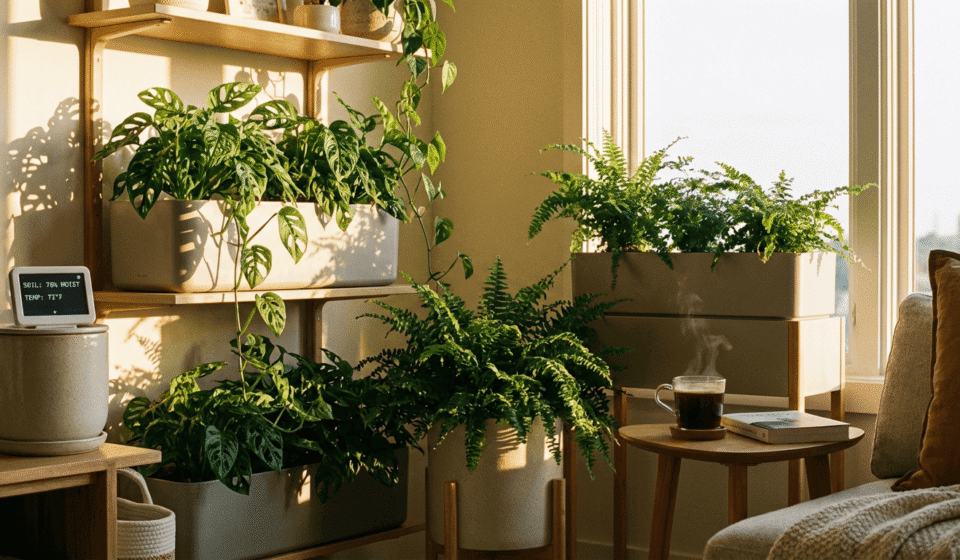
Smart watering isn’t just about the convenience of not carrying a watering can; it is about resource management and plant health optimization. By utilizing advanced smart sensors that measure soil humidity levels in real-time, you bridge the communication gap between you and your plants. These devices “speak” for the plant, ensuring it receives life-sustaining moisture only when its physiological state truly demands it.
Why Soil Moisture Sensors are Game Changers
To understand why you should transition to a smart system, we must look at the science of soil. Soil density, pot material (terracotta vs. plastic), and ambient humidity all affect how quickly water evaporates.
- Eliminating Anxiety: The “plant parent” guilt of forgetting to water or overcompensating by drowning the plant is eliminated.
- Water Conservation: Precision irrigation dramatically reduces domestic water consumption. In an era where sustainability is paramount, saving every drop counts.
- Data-Driven Growth: Some advanced sensors even track nutrient levels (NPK) and light intensity, giving you a 360-degree view of your plant’s health.
Choosing the Right Technology for Your Space
Not all apartments have the same layout, and certainly, not all plants have the same thirst. To achieve the best results, selecting the right technology tailored to your specific “green footprint” is crucial.
1. Individual Soil Moisture Sensors
For those with a collection of high-maintenance, “diva” plants like Fiddle Leaf Figs or Calatheas, simple Bluetooth or Wi-Fi soil moisture sensors are highly effective. These provide precise, real-time alerts directly to your smartphone, telling you exactly when the soil reaches a specific dryness threshold.
2. App-Controlled Timers and Drip Systems
If you manage a balcony garden, a vertical green wall, or multiple pots in one area, individual sensors might be impractical. In this case, app-controlled timers linked to a micro-drip irrigation system offer complete automation. You can schedule watering for the early morning hours—the optimal time for plants to absorb moisture before the sun’s heat rises.
3. Hydroponic Smart Kits
For those focused on edible plants, such as herbs, lettuce, or cherry tomatoes, hydroponic smart kits provide the highest growth rate. These systems are mess-free (no soil) and use a circulating water nutrient solution managed by an onboard computer.
Critical Steps for a Successful Transition
Moving to a smart gardening system requires more than just buying a gadget. You must “engineer” your environment:
- Map Your Light Zones: Different light levels dictate different evaporation rates. A plant in a south-facing window will need its smart sensor calibrated differently than one in a shaded corner.
- Quality Over Price: While it may be tempting to buy the cheapest equipment from unverified sources, investing in high-quality, calibrated sensors prevents system failures. A faulty sensor that stays “stuck” on a dry reading could lead to catastrophic overwatering.
- The Human Touch: Technology is an assistant, not a total replacement. Periodically check your system to ensure batteries are charged and nozzles are not clogged.
Frequently Asked Questions (FAQ)
Q1: Can I use smart watering for all types of plants? Yes, but calibration is key. Succulents require the sensor to trigger at a much lower humidity percentage than tropical ferns.
Q2: Does smart watering save money? In the long run, yes. You save on water bills, but more importantly, you save money by preventing the death of expensive, mature indoor plants.
Q3: Is Wi-Fi necessary for smart gardening? While many systems use Wi-Fi for remote alerts, there are Bluetooth-only options and self-contained automated kits that don’t require an internet connection to function.
Conclusion: Engineering a Thriving Ecosystem
By adopting these smart watering technologies, you are doing more than just keeping your plants alive; you are engineering a thriving, self-sustaining indoor ecosystem. At Mozafer, we are committed to making green living effortless and sustainable, one smart step at a time. Join us in the botanical revolution and let technology help you grow a better, greener future.